
Menu
Coriolis Force is the apparent rotational deflection experienced by objects moving within a rotating reference frame, such as a gas mass traveling over the rotating Earth. It is the Macro Cohesion force in Superphysics’ Gas Relationalities — the large-scale, rotational organizing action that shapes weather systems, ocean currents, and planetary flows through aetherspace and space.
Unlike air pressure (linear/displacement), Coriolis is rotational and structure-forming — it curves moving gas into spirals, creating coherent cyclonic and anticyclonic systems that persist over vast scales.
The Equation: Rotational Deflection
Coriolis Acceleration (Micro Origins, Macro Manifestation)
Where:
| Symbol | Meaning | Unit |
|---|---|---|
| Coriolis acceleration | ||
| Angular velocity of rotating frame (Earth) | ||
| Velocity of object relative to rotating frame | ||
| Factor arising from frame transformation | — | |
| Cross product (perpendicular deflection) | — |
Coriolis Force (Per Unit Mass)
The force is always perpendicular to velocity — it does no work, only redirects.
Rossby Number (When Coriolis Dominates)
| Symbol | Meaning | Unit |
|---|---|---|
| Ro | Rossby number (ratio of inertial to Coriolis forces) | — |
| v | Flow velocity | |
| Coriolis parameter (latitude-dependent) | ||
| L | Characteristic length scale |
When
, Coriolis dominates — large-scale cohesion emerges. When
, displacement dominates.
Geostrophic Balance (Cohesion–Displacement Equilibrium)
This balance between Coriolis (cohesion) and pressure gradient (displacement) creates stable geostrophic winds.
Key Properties of Coriolis Force
| Property | Explanation |
|---|---|
| Rotational | Deflects motion perpendicular to velocity — pure cohesion |
| Frame-dependent | Apparent force arising from rotating reference frame |
| Latitude-dependent | Zero at equator, maximum at poles (( f = 2\Omega \sin\phi )) |
| Direction-dependent | Deflects right in Northern Hemisphere, left in Southern |
| Workless | Perpendicular to motion — changes direction, not speed |
| Scale-dependent | Dominates large scales (( Ro \ll 1 )), negligible small scales |
| Structure-forming | Organizes flows into cyclones, anticyclones, gyres |
Ekman Spiral (Cohesion in Boundary Layers)
Where,
is the Ekman depth. Wind-driven surface currents spiral with depth due to Coriolis cohesion.
Real-Life Examples
| Example | How Coriolis Works |
|---|---|
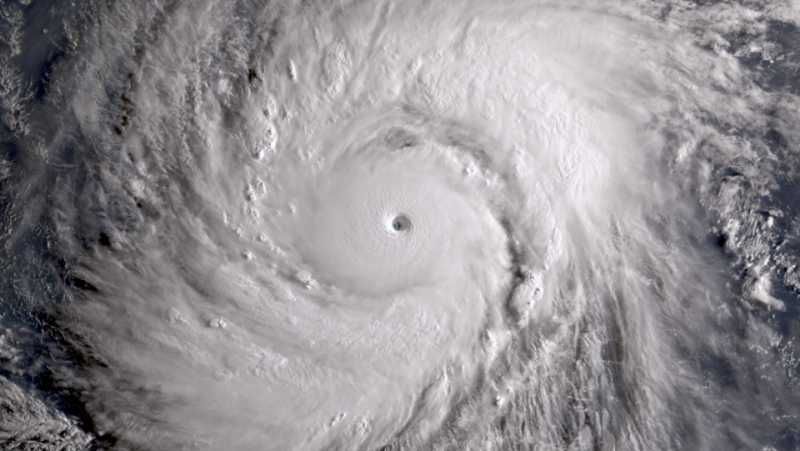
| 1. Hurricane rotation | Cyclones spin counterclockwise in N. Hemisphere, clockwise in S. Hemisphere |
| 2. Trade winds | Deflected from north-south to east-west, creating global wind belts |
| 3. Ocean gyres | Large rotating current systems (e.g., North Atlantic Gyre) shaped by Coriolis |
| 4. Foucault pendulum | Pendulum plane rotates due to Earth’s rotation — direct Coriolis evidence |
| 5. Artillery trajectories | Long-range shells deflect right (N. Hemisphere) — must be corrected |
| 6. Riverbank erosion | Right banks erode faster in N. Hemisphere (Baer’s Law) |
| 7. Jet stream meanders | Rossby waves form from Coriolis gradients |
| 8. Upwelling zones | Coastal winds deflect surface water, causing deep water to rise |
| 9. Cyclonic storms | Low-pressure systems organize into rotating structures |
| 10. Ballistic missiles | Intercontinental trajectories curve due to Coriolis deflection |
Summary
| Question | Answer |
|---|---|
| What is Coriolis force? | Apparent rotational deflection of motion in a rotating frame |
| What law describes it? | Coriolis acceleration: ( \mathbf{a}_C = -2 , \boldsymbol{\Omega} \times \mathbf{v} ) |
| What type of force? | Macro Cohesion (rotational, Rule 2 + 4) |
| What drives it? | Frame rotation, large-scale motion, latitude |
| Real examples? | Hurricanes, trade winds, ocean gyres, Foucault pendulum |
| What’s its displacement counterpart? | Air Pressure (Macro Displacement) |
Bottom line: Coriolis force is the rotational, structure-forming deflection of large-scale flows — the Macro Cohesion force that pairs with air pressure’s linear displacement in Superphysics’ Gas Relationalities.
Leave a Comment
Thank you for your comment!
It will appear after review.