
Menu
To understand morality, we must understand dharma first.
Every idea has a purpose of why it was ideated or manifested. These aethreal ideas go down the 5 layers until some of them manifest in physical reality.
The things that we perceive therefore have a purpose. In compound things that are made up of many simpler things, this make-up leads to a design from its inventor or creator:
- A smartphone is designed to withstand being dropped a few feet, but not many meters
- A basketball, on the other hand, is designed to withstand being dropped from long distances
We can say that the dharma or nature or design or purpose of a smartphone is different from that of a basketball.

This dharma then leads to the different “do’s and dont’s” or “moral rules” for handling:
- A smartphone must be held carefully and not dropped, but a basketball can be thrown long distances
- A smartphone can be put inside your pocket, but a basketball cannot
Morality Changes Because Feelings Change
Here we can see that morality differs on the objects and its situation in space and time.
- A bulky cellphone in the 1980’s cannot be put inside the pocket, different from a modern cellphone
- A rubber ball made 200 years ago will not survive being dunked, very different from a modern basketball
Similarly among humans, the moral rules of a certain time period can be very different from that of another even in the same place. For example:
- the early Jews had a policy of an eye-for-an-eye
- this was later reversed by Jesus who advocated forgiveness
- this was then overturned by the Prophet Mohammad who sanctioned revenge or punishment
These moral rules were created to preserve the society of the Jews, Christians, and Muslims according to their Natures.
The difference in the Jewish, Islamic, and Christian moral policies is because:
- During the Jewish period, international politics was lawless, barbaric, and unstable
- During the Christian period, politics and economy was stable under the Romans
- During Mohammad’s time, the Roman and Persian empires were unstable, leading to external barbarism
We can say that the differences in periods are from the differences in feelings.
In our basketball and cellphone example:
- The reduced size of cellphones are from the increased feeling towards portability
- The increased strength of basketballs are from the increased athleticism of basketball

This gives us a hierarchy:
- Feelings – what we feel things should be
- Dharma – the purpose or specifications (specs) that put into the thing
- Morality – how we use or work with those specs
Why do our feelings change?
Feelings change because they are a metaphysical wave* that comes in contact with physical space-time. A wave has crests and troughs and are never a straight line.
These ups and downs:
- are caused by 2 Forces and Yin and Yang
- lead to the morals of one era being overturned by another era, to be itself overturned later.
This adds to our hierarchy:
- Yin Yang
- Feelings
- Dharma
- Morality
People who do not know Yin-Yang will be unable to accurately define morality or even give the proper moral guidelines.
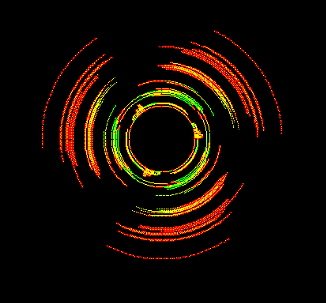
*Our definition of morality is based on Superphysics which splits existence into a metaphysical domain made up of waves, and a physical domain made up of particles, such as quark-particles and soul-particles existing in space and time.
A Proper Definition of Morals
Morality is Latin for manners. Manners define do’s and dont’s.
In humans, the universal good is happiness. This allows us to define morals based on happiness.
The problem is that happiness is ambiguous. It can mean physical happiness, mental happiness, spiritual happiness, etc.
This is why we use the word Positivity as Yang or Shiva as the basis or morals.
- Moral — a quality that produces positivity for now and for as long as possible, for the self and for as many entities as possible.
- We define entities as anything that the mind regards as having an identity
- We define positivity as a cause that naturally make us feel lighter, such as happiness, contentment, love, peace coming from being in line with Dharma or the purpose of Existence Itself
- Morality — a state of being moral
- Moral Philosophy — the organized system of ideas designed to bring about morality
Notice that our definition of moral is not absolute in the sense that it does not include infinity nor all entities. The phrase “for as long as possible” forces the mind to think of future consequences, while “as many entities as possible” forces the ego to go outside of the self.
Virtues
The root idea behind morality is the positivity that then leads to other positive waves, such as virtues.
David Hume’s first virtues are justice and benevolence. This matches the idea of Socrates, who put prime importance to justice (which we interpret as dharma).
We shall begin by looking into the social virtues of benevolence and justice. This will then lead us to other social virtues.

Dharma [Justice] is sometimes spoken of as the virtue of an individual, and sometimes as the virtue of a State.

This adds to our hierarchy:
- Yin Yang
- Feelings
- Dharma
- Morality
- Virtues (e.g. Justice)
This means that virtues depend on morality.
- Morality is subservient to Dharma
- Dharma comes from Feelings
- Feelings come from Yin-Yang (Negative-Positive)
- Yin-Yang come from the singularity of the Absolute Entity or “The One” that then creates the Supreme Entity
By forcing the mind to think into the future and into other entities, the mind will naturally discover the patterns that will point to the dynamics of a Supreme Entity that works behind the scenes to generate reality and existence.
This would force backward humans to get their minds out of the monkey-state where the mind does not think and the heart does not feel. This then will replace the animal morals of mere eating, sleeping, having sex, marking territory, etc.
Leave a Comment
Thank you for your comment!
It will appear after review.